
Regulation · 19 August 2026
Twenty years on: what the UK did about falls from height
In April 2026 MBIE asked us what we knew about how working platforms are used overseas. The United Kingdom solved a version of this problem two decades ago, and the mechanism was regulatory.
Before 2005, UK height safety was governed by a patchwork of instruments widely criticised for leaving protection gaps. Falls from height had been the leading cause of workplace death for decades.
The Work at Height Regulations 2005 replaced that patchwork with a single framework built around a mandatory hierarchy of controls. The shift was philosophical as much as legal: from a reactive, protection-based approach to a prevention-first one.
Two features of those regulations matter most for New Zealand.
The first is that the hierarchy must be followed in sequence. You cannot skip a level without demonstrating it was not reasonably practicable — and Regulation 6(5) states explicitly that collective protection measures take priority over personal ones.
The second is that duties do not pass down the supply chain. Employers, the self-employed, and anyone controlling the work of others at height all carry duties, and CDM 2015 places overarching responsibility on the Principal Contractor. The practical effect has been to move working platform requirements into procurement.
Platform decking is now standard across UK volume housebuilding. Taylor Wimpey, Persimmon, Barratt Redrow, Vistry and Bellway have it embedded in standard site safety methodology. At least eight manufacturers supply FASET-approved systems to that market.
FASET — the trade and training body — trains more than 1,000 candidates a year across 65-plus audited member companies, with a manufacturer-specific competency card scheme behind it.
On the numbers: workplace fatal injuries in Great Britain fell approximately 68% between 1990 and 2010, a period that included progressively more stringent height safety requirements. Attributing that to any single regulation would be overstating it. What UK industry bodies do credit the 2005 regulations with is a step-change in how employers approach height risk.
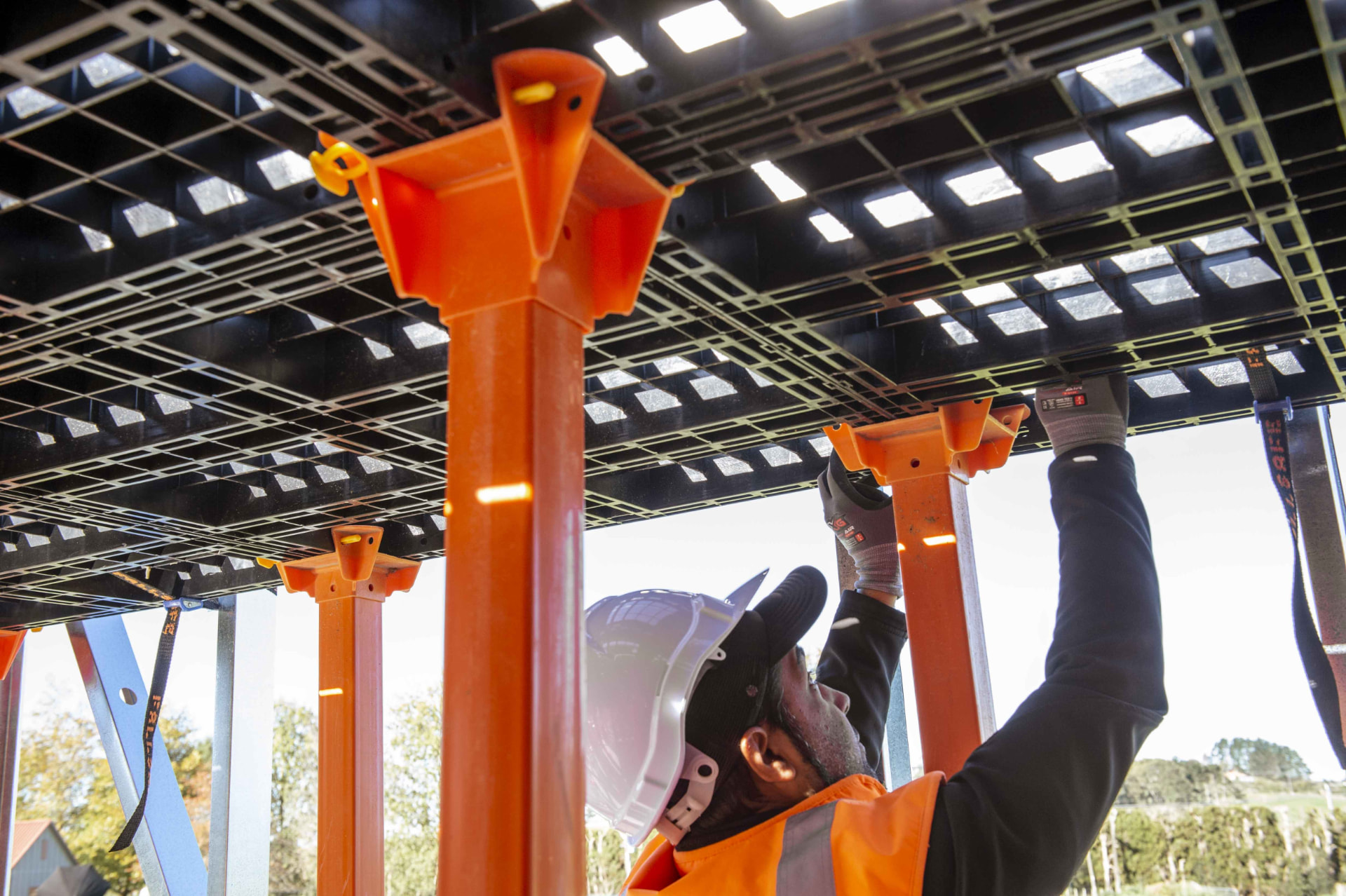
Safety nets need clearance below them to deploy safely. In much residential construction — here and in the UK — that clearance does not exist. Platform decking works within the floor-to-floor heights available. In the UK this was not a supplementary option. For that building type, it was the primary viable collective protection measure.
New Zealand has the same building typologies and the same constraint.

Written by
David Grigor
Founder and Director, Workdek
The full picture, including the UK regulatory framework and the FASET competency scheme.
Tell us about your build.
Send us your plans and some details of the build, and one of the team will come back to you with a quote.